Frequently Asked Questions: Stone Cutting with Waterjet
Waterjet technology has become one of the most reliable and versatile methods for processing natural and engineered stone. Because it cuts without heat, vibration, or mechanical force, it delivers exceptional precision while protecting even the most delicate materials. Below, you’ll find the answers to the most common questions fabricators and designers ask about waterjet stone cutting.
What types of stone can be cut on a waterjet?
Waterjets can cut virtually all natural and engineered stone, including granite, marble, quartzite, limestone, travertine, slate, onyx, soapstone, quartz, porcelain, sintered stone, ultra compact surfaces like Dekton and Neolith, and even glass. If it’s used in stone fabrication, waterjet can almost always process it.
How is waterjet cutting different from other stone-cutting methods?
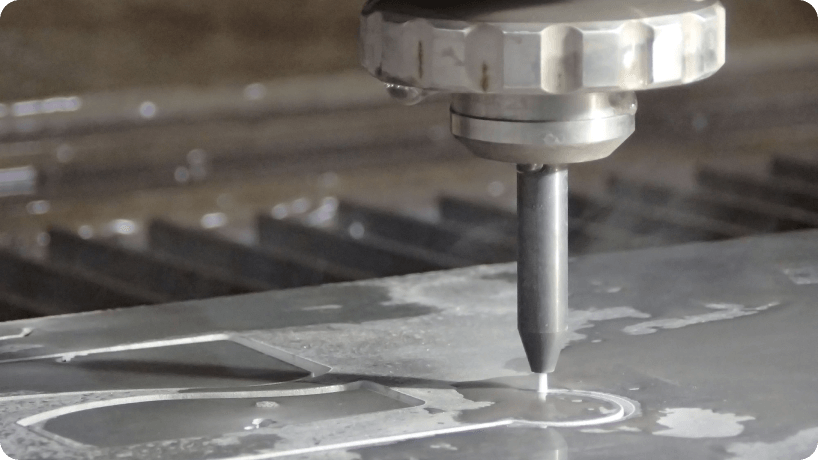
Waterjet cutting stands apart from traditional saws by offering far greater precision, flexibility, and material protection. It can cut tight radii and complex shapes while using a much smaller kerf—about one third the width of a typical saw blade—helping preserve material, reduce waste, and improve vein matching and pattern alignment on miters.
Because the process generates no heat, applies no mechanical pressure, and produces no vibration, it prevents discoloration, stress, and chipping that can occur with saw cutting. Waterjet cutting is also fully water contained, eliminating airborne silica dust. These advantages make it especially valuable for brittle or highly detailed work where traditional tools may cause damage.
Because the process generates no heat, applies no mechanical pressure, and produces no vibration, it prevents discoloration, stress, and chipping that can occur with saw cutting. Waterjet cutting is also fully water contained, eliminating airborne silica dust. These advantages make it especially valuable for brittle or highly detailed work where traditional tools may cause damage.
What thickness of stone can be cut?
Although most slabs are 2–3 cm, customers have successfully cut stone up to 8+ inches thick, depending on the machine and material. Waterjets offer far more thickness flexibility than traditional slab equipment.
How does abrasive selection impact the cut quality?
The type of abrasive and grit influences speed and finish.
• 80 mesh garnet is standard for most stone applications.
• Finer abrasives create smoother edges at slower speeds.
• Coarser abrasives cut faster but may reduce smoothness.
Proper abrasive selection balances productivity and finish requirements, but 80 mesh garnet is the most common for cutting stone.
• 80 mesh garnet is standard for most stone applications.
• Finer abrasives create smoother edges at slower speeds.
• Coarser abrasives cut faster but may reduce smoothness.
Proper abrasive selection balances productivity and finish requirements, but 80 mesh garnet is the most common for cutting stone.
What factors influence the cutting speed for hard materials?
Speed is affected by hardness, density, thickness, desired finish, and mineral composition. Harder and denser stones, common in darker granites and quartzites, generally require slower cutting. Mineral composition matters even more than color.
How do you minimize chipping or micro fractures?
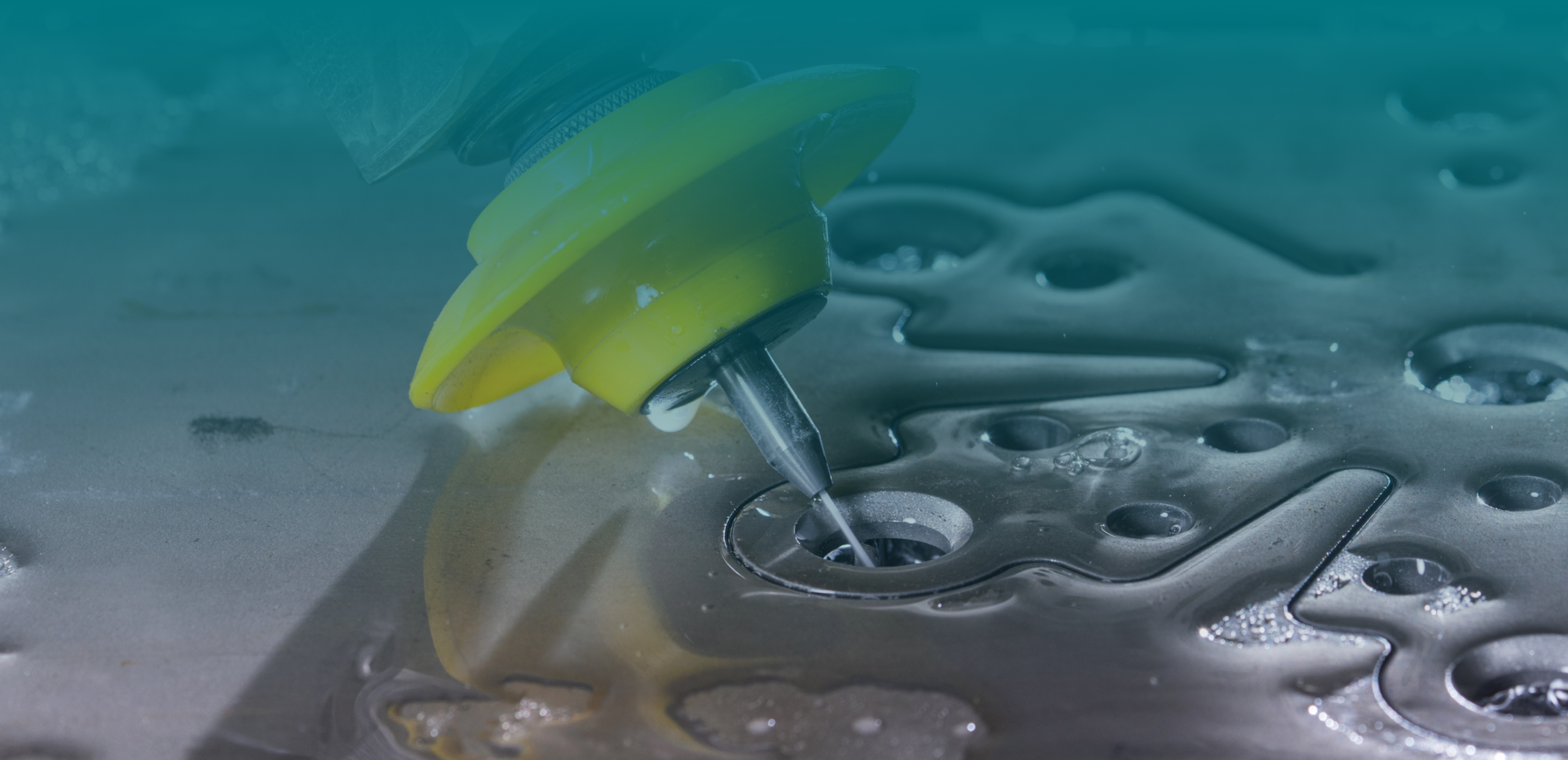
When cutting brittle stone, proper process control is key: optimized speeds, correct abrasive selection, stable support, and advanced piercing methods such as UltraPierce vacuum assist, low pressure piercing, or dynamic piercing greatly reduce stress and chipping. Piercing techniques are especially important for veined or brittle stone.
Learn more about our UltraPierce vacuum assist
Learn more about our UltraPierce vacuum assist
Is waterjet cutting safe for delicate or brittle stone materials?
Yes. Waterjet cutting is one of the safest and most effective methods for processing delicate, brittle, or highly veined stone. Because the process uses no heat, vibration, or blade contact, it avoids the stress, cracking, and discoloration commonly associated with traditional saw cutting.
Chipping and micro‑fractures are minimized through precise process control, including optimized cutting speeds, proper abrasive selection, stable material support, and advanced piercing techniques. Methods such as low‑pressure piercing, dynamic piercing, and UltraPierce vacuum assist significantly reduce blowout and stress at the entry point, which is especially critical for veined or fragile stone. These controls make waterjet cutting ideal for high‑end slab materials where edge quality and structural integrity are essential.
Learn more about our UltraPierce vacuum assist
Chipping and micro‑fractures are minimized through precise process control, including optimized cutting speeds, proper abrasive selection, stable material support, and advanced piercing techniques. Methods such as low‑pressure piercing, dynamic piercing, and UltraPierce vacuum assist significantly reduce blowout and stress at the entry point, which is especially critical for veined or fragile stone. These controls make waterjet cutting ideal for high‑end slab materials where edge quality and structural integrity are essential.
Learn more about our UltraPierce vacuum assist
What setup or fixturing techniques are recommended to prevent movement or vibration of large stone slabs during cutting?
In most cases, the slab’s own weight provides enough stability. Best practices include maintaining proper table slat spacing, using tabs for small parts, and clamping only when necessary. Waterjets exert no lateral force, so heavy fixturing is rarely required.
What software features or nesting strategies help maximize material yield when cutting custom stone shapes?
FlowXpert and FlowCut offer advanced programming features like array tools and efficient nesting. They also integrate with slab layout tools such as Slabsmith for vein matching, grain alignment, and precise placement using DXF reference points. This reduces waste and improves accuracy.
Learn more about FlowXpert and FlowCut
Learn more about FlowXpert and FlowCut
How accurate is waterjet for cutting stone?
Waterjets can hold tolerances of ±0.001 inches, enabling tight fitting inlays, medallions, precision assemblies, and architectural applications requiring exact alignment. This reduces the need for hand fitting during installation.
Can waterjet produce intricate shapes and patterns?
Absolutely. Waterjets excel at fine details, tight radii, interlocking inlays, geometric designs, and decorative medallions, work that is difficult or impossible with traditional cutting tools.
Can you add texture to stone with a waterjet?
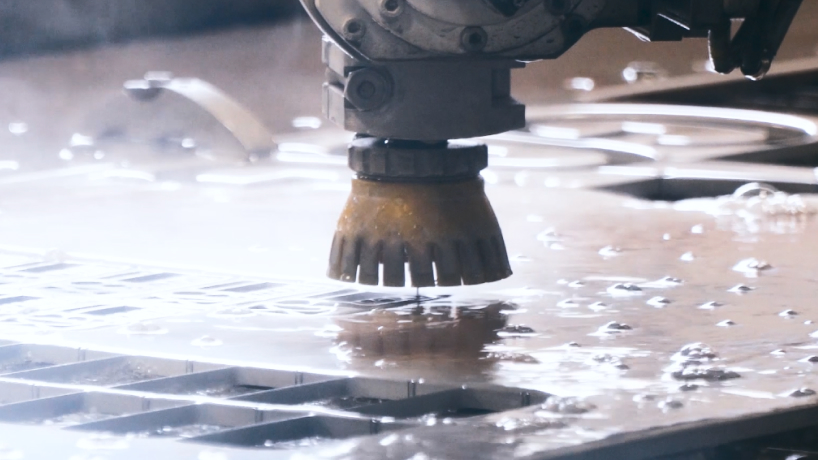
Yes. Flow waterjets can add texture to stone using the Flow Texturing Tool. The Flow Texturing Tool is an air‑driven rotary attachment that mounts directly to the standard cutting head and is specifically designed for surface texturing applications.
The tool directs ultra‑high‑pressure (UHP) water through a rotating nozzle, creating a controlled spray pattern that textures the surface of the material rather than cutting through it. This makes it ideal for producing decorative etched designs, artistic surface patterns, or functional non‑slip textures on stone and tile flooring.
The tool directs ultra‑high‑pressure (UHP) water through a rotating nozzle, creating a controlled spray pattern that textures the surface of the material rather than cutting through it. This makes it ideal for producing decorative etched designs, artistic surface patterns, or functional non‑slip textures on stone and tile flooring.
What types of projects benefit from waterjet-cut stone?
Waterjets are ideal for medallions, inlays, custom tile, tight grout line miters, decorative wall features, and materials prone to chipping, such as brittle porcelains or dense quartzites. They enable complex geometry while expanding material possibilities.
Is waterjet suitable for large commercial projects?
Yes. While saws may cut straight lines faster, waterjets eliminate secondary operations on complex work. The combination of precision and flexibility often reduces rework and labor on commercial jobs.
Does waterjet weaken the stone?
No. With no heat, vibration, or mechanical stress, waterjet cutting does not compromise stone strength.
Will the edges be smooth, or do they need finishing?
Finish depends on cut speed and material type. Slower speeds = smoother edges. Engineered materials are often cut more smoothly than some natural stones. Exposed edges typically still require some finishing, but waterjet edges, especially on detailed shapes or miters, commonly need far less cleanup than saw cut edges.