
JQ Enterprises
JQ Enterprises Incorporated combines advanced cutting technology with comprehensive manufacturing expertise to deliver precision-driven results. From high-accuracy waterjet cutting and fiber laser processing to forming, milling, and turning, the company offers end-to-end fabrication solutions designed to meet demanding production requirements while maintaining exceptional quality and performance.
When Quint Sudbury founded JQ Enterprises in 2002, the goal wasn't to specialize in one particular type of work – it was to solve customer problems.
Like many successful job shops, JQ Enterprises grew by saying "yes" to opportunities. What started with basic fabrication equipment – a welder, brake, and shear – quickly evolved into a business capable of handling a wide variety of custom manufacturing projects. While metal fabrication makes up the majority of the shop's work today, flexibility has always been the foundation of the business. From custom fabrication and architectural projects to HVAC work and production runs, JQ Enterprises has built a reputation around taking on the jobs others may pass on.
"We do a little bit of everything," Quint explains. "Whatever comes through the door."
As customer demand increased, so did the need for cutting capacity. At first, JQ Enterprises outsourced much of its cutting work, but growing volumes eventually made bringing that capability in-house the logical next step.
The company's first waterjet wasn't a Flow system. It was a used machine that gave Quint a taste of what abrasive waterjet cutting could do – but it also revealed the limitations of relying on equipment that wasn't built for the production demands of a busy job shop.
As lead times stretched and more work piled up, Quint knew he needed another machine.
That's when he discovered Flow.
After connecting with Flow representatives, Quint visited the facilities and saw firsthand what separated the company's equipment from what he'd been running.
"The difference was pretty obvious," he recalls.
What stood out wasn't just the machine itself. It was the fact that the equipment felt purpose-built for real manufacturing environments – designed to run day after day in production settings where uptime and reliability matter.
That first Flow waterjet marked the beginning of a relationship that has now spanned more than two decades.
Over the years, JQ Enterprises added more Flow equipment and worked closely with numerous members of the Flow team. Through service visits, machine installations, troubleshooting calls, and ongoing support, Quint developed relationships with people throughout the organization.
For him, that accessibility has always been one of Flow's greatest strengths.
"It's nice to not just be a number," he says.
When an issue arises, he knows who to call. More importantly, he knows he'll get an answer from someone who understands both the machine and the realities of running a fabrication business.
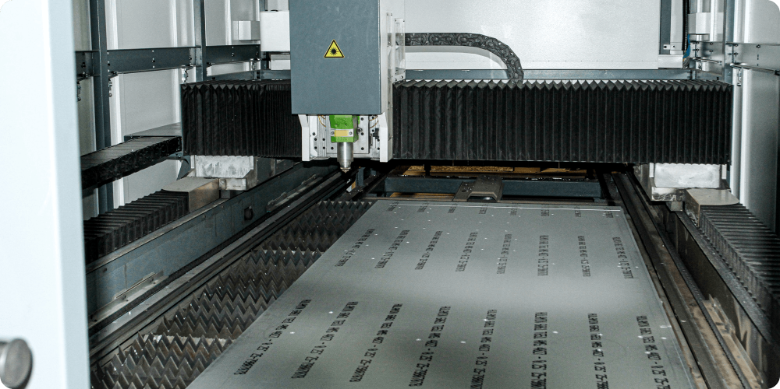
But manufacturing continues to evolve. As fiber laser technology advanced, Quint began noticing more customers looking for faster turnaround times and more cost-effective solutions for sheet metal applications. Work that had traditionally been routed through a waterjet was increasingly becoming a better fit for laser cutting.
Rather than viewing this shift as a threat, Quint saw it as an opportunity. He believed a fiber laser could complement the waterjets already in the shop, creating additional capacity and allowing JQ Enterprises to match the right cutting technology to each application. It would also open the door to new types of work.
Once Quint decided a fiber laser belonged in the shop, the next step was choosing the right partner.
"I already had confidence in the people," Quint says. “That made the decision easier.”
Adding a laser wasn't simply about buying another machine – it was about extending a partnership that had already proven its value time and time again.
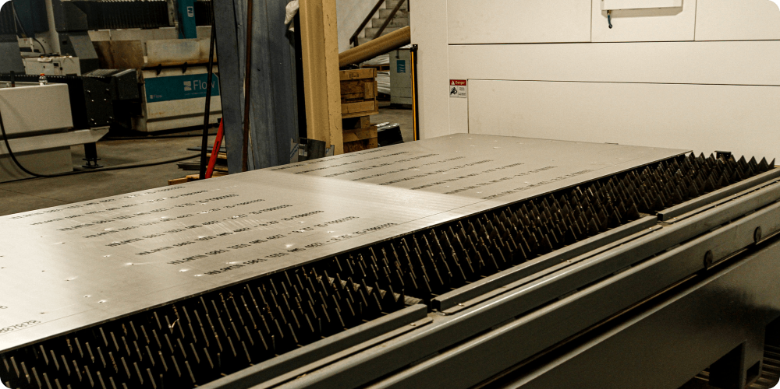
Today, JQ Enterprises uses the laser for jobs where speed and efficiency are the priority, while reserving its waterjets for applications where their versatility provides the greatest advantage. The result has been a dramatic increase in throughput. In fact, the biggest surprise wasn't how quickly the laser cut parts. It was how quickly everything else became the bottleneck.
"The cutting isn't the issue anymore," Quint explains.
Instead, post-processing, programming, part handling, and downstream operations have become the areas requiring the most attention. The laser's speed exposed opportunities to improve the rest of the manufacturing workflow.
It's the kind of challenge most fabricators are happy to have.
Projects involving thinner materials, higher-volume production runs, architectural components, and HVAC applications have become increasingly viable for the shop. The laser has made it possible for JQ Enterprises to pursue this work more competitively by increasing throughput and reducing operating costs. Jobs that may have been difficult to price effectively on a waterjet can now be processed faster while still maintaining the tight tolerances and edge quality customers expect.
“We’re doing a lot more architectural work now. The jobs that require a good finish can be done on the laser, and pretty quickly,” Quint says.
For production-style orders, the difference can be significant. Thousands of identical parts can move through the laser at speeds that allow JQ Enterprises to compete for work that may not have been practical before. Just as important, operating costs for laser-cut applications can be substantially lower, allowing JQ Enterprises to remain competitive while protecting margins.
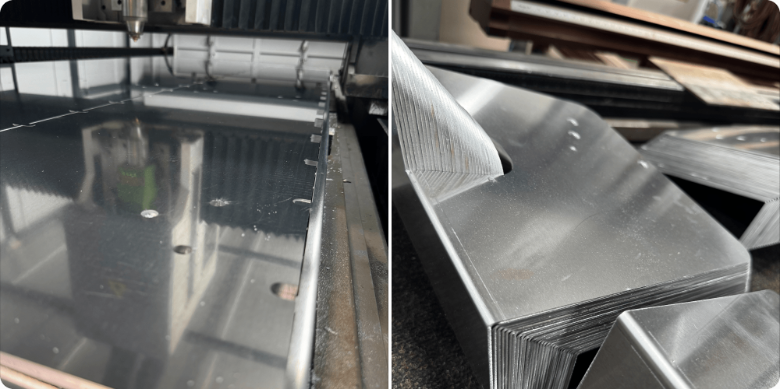
Not the machine. The workflow around it.
Like many manufacturers adopting higher-speed cutting technology, JQ Enterprises discovered that adding cutting capacity often requires investments elsewhere in the process as well.
Additional post-processing equipment. Better material flow. More programming resources.
The laser didn't create new problems – it simply revealed where the next opportunities for improvement existed.
"It's made us look at the whole process differently," Quint says.
What began as a search for additional cutting capacity has evolved into a long-term partnership – one that continues to help JQ Enterprises grow, adapt, and stay ready for whatever comes through the door next.
Like many successful job shops, JQ Enterprises grew by saying "yes" to opportunities. What started with basic fabrication equipment – a welder, brake, and shear – quickly evolved into a business capable of handling a wide variety of custom manufacturing projects. While metal fabrication makes up the majority of the shop's work today, flexibility has always been the foundation of the business. From custom fabrication and architectural projects to HVAC work and production runs, JQ Enterprises has built a reputation around taking on the jobs others may pass on.
"We do a little bit of everything," Quint explains. "Whatever comes through the door."
As customer demand increased, so did the need for cutting capacity. At first, JQ Enterprises outsourced much of its cutting work, but growing volumes eventually made bringing that capability in-house the logical next step.
The company's first waterjet wasn't a Flow system. It was a used machine that gave Quint a taste of what abrasive waterjet cutting could do – but it also revealed the limitations of relying on equipment that wasn't built for the production demands of a busy job shop.
As lead times stretched and more work piled up, Quint knew he needed another machine.
That's when he discovered Flow.
Finding the Right Partner
In 2005, Quint began exploring options for expanding his cutting capabilities. His search led him to Flow and to people who would become long-term partners in the growth of his business.After connecting with Flow representatives, Quint visited the facilities and saw firsthand what separated the company's equipment from what he'd been running.
"The difference was pretty obvious," he recalls.
What stood out wasn't just the machine itself. It was the fact that the equipment felt purpose-built for real manufacturing environments – designed to run day after day in production settings where uptime and reliability matter.
That first Flow waterjet marked the beginning of a relationship that has now spanned more than two decades.
Over the years, JQ Enterprises added more Flow equipment and worked closely with numerous members of the Flow team. Through service visits, machine installations, troubleshooting calls, and ongoing support, Quint developed relationships with people throughout the organization.
For him, that accessibility has always been one of Flow's greatest strengths.
"It's nice to not just be a number," he says.
When an issue arises, he knows who to call. More importantly, he knows he'll get an answer from someone who understands both the machine and the realities of running a fabrication business.
Recognizing a Changing Market
For years, waterjet technology served as the backbone of JQ Enterprises' cutting operation. The flexibility to cut virtually any material made it a natural fit for a custom job shop environment.But manufacturing continues to evolve. As fiber laser technology advanced, Quint began noticing more customers looking for faster turnaround times and more cost-effective solutions for sheet metal applications. Work that had traditionally been routed through a waterjet was increasingly becoming a better fit for laser cutting.
Rather than viewing this shift as a threat, Quint saw it as an opportunity. He believed a fiber laser could complement the waterjets already in the shop, creating additional capacity and allowing JQ Enterprises to match the right cutting technology to each application. It would also open the door to new types of work.
Once Quint decided a fiber laser belonged in the shop, the next step was choosing the right partner.
Why Flow LZR?
Like most equipment buyers, Quint explored several laser options before making a decision. While some competitors offered lower-priced machines and longer track records in the laser market, Quint's decision ultimately came down to trust. After years of working with Flow, he knew the level of service, support, and partnership he could expect long after the machine was installed."I already had confidence in the people," Quint says. “That made the decision easier.”
Adding a laser wasn't simply about buying another machine – it was about extending a partnership that had already proven its value time and time again.
A Different Kind of Bottleneck
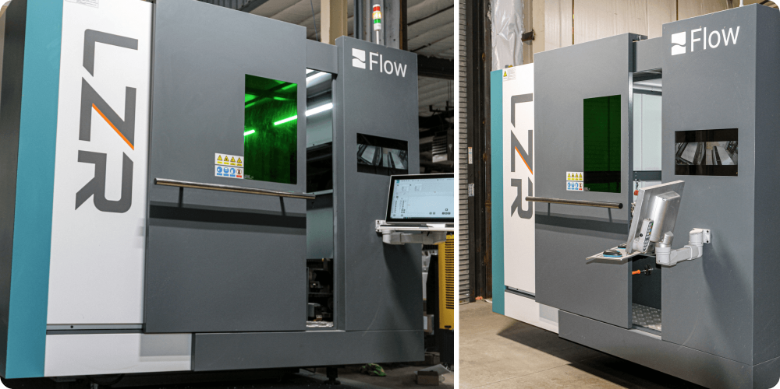
Once the Flow LZR arrived, the impact became clear almost immediately.Today, JQ Enterprises uses the laser for jobs where speed and efficiency are the priority, while reserving its waterjets for applications where their versatility provides the greatest advantage. The result has been a dramatic increase in throughput. In fact, the biggest surprise wasn't how quickly the laser cut parts. It was how quickly everything else became the bottleneck.
"The cutting isn't the issue anymore," Quint explains.
Instead, post-processing, programming, part handling, and downstream operations have become the areas requiring the most attention. The laser's speed exposed opportunities to improve the rest of the manufacturing workflow.
It's the kind of challenge most fabricators are happy to have.
Opening the Door to New Opportunities
The Flow LZR has done more than increase capacity – it has changed the types of jobs JQ Enterprises can pursue competitively.Projects involving thinner materials, higher-volume production runs, architectural components, and HVAC applications have become increasingly viable for the shop. The laser has made it possible for JQ Enterprises to pursue this work more competitively by increasing throughput and reducing operating costs. Jobs that may have been difficult to price effectively on a waterjet can now be processed faster while still maintaining the tight tolerances and edge quality customers expect.
“We’re doing a lot more architectural work now. The jobs that require a good finish can be done on the laser, and pretty quickly,” Quint says.
For production-style orders, the difference can be significant. Thousands of identical parts can move through the laser at speeds that allow JQ Enterprises to compete for work that may not have been practical before. Just as important, operating costs for laser-cut applications can be substantially lower, allowing JQ Enterprises to remain competitive while protecting margins.
Lessons Learned
Looking back, Quint says there is one thing he would have planned differently.Not the machine. The workflow around it.
Like many manufacturers adopting higher-speed cutting technology, JQ Enterprises discovered that adding cutting capacity often requires investments elsewhere in the process as well.
Additional post-processing equipment. Better material flow. More programming resources.
The laser didn't create new problems – it simply revealed where the next opportunities for improvement existed.
"It's made us look at the whole process differently," Quint says.
Looking Ahead
More than twenty years after purchasing his first Flow waterjet, Quint is preparing to add another chapter to that relationship with the arrival of a new Flow NX Pro waterjet. And with future equipment investments already on the radar, the vision of a fully integrated Flow cutting and forming operation no longer feels far off.What began as a search for additional cutting capacity has evolved into a long-term partnership – one that continues to help JQ Enterprises grow, adapt, and stay ready for whatever comes through the door next.